
The Society Puppet Show
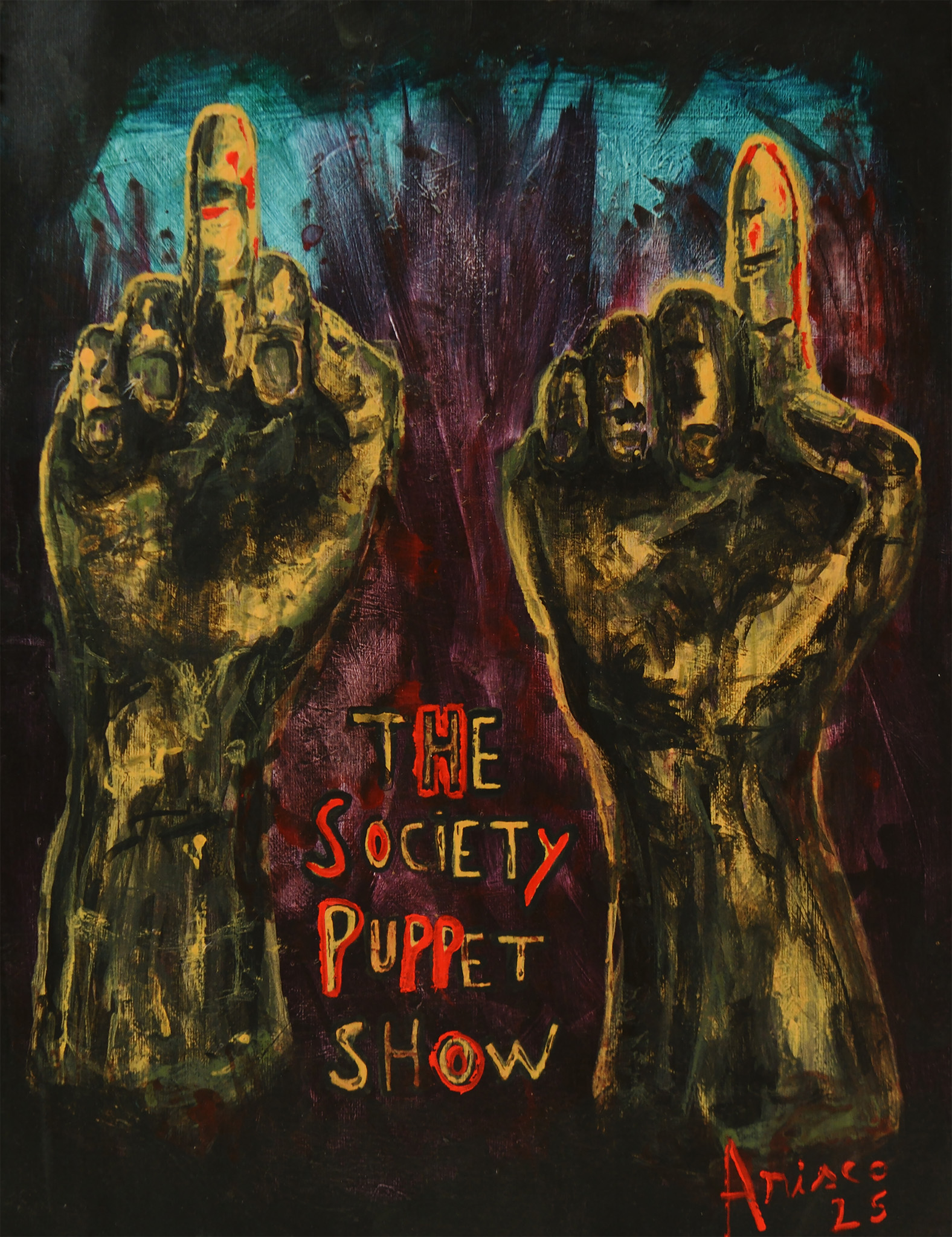
An opening blow. A scene of staged civility where movement is never fully self-owned.
A sequence built from distortion, obedience, spectacle and social fatigue. These works observe the theatre of passive acceptance and the rituals of contemporary submission without asking permission from good taste.
An opening blow. A scene of staged civility where movement is never fully self-owned.

Collective stupidity treated as heritage, repeated until it starts to look respectable.
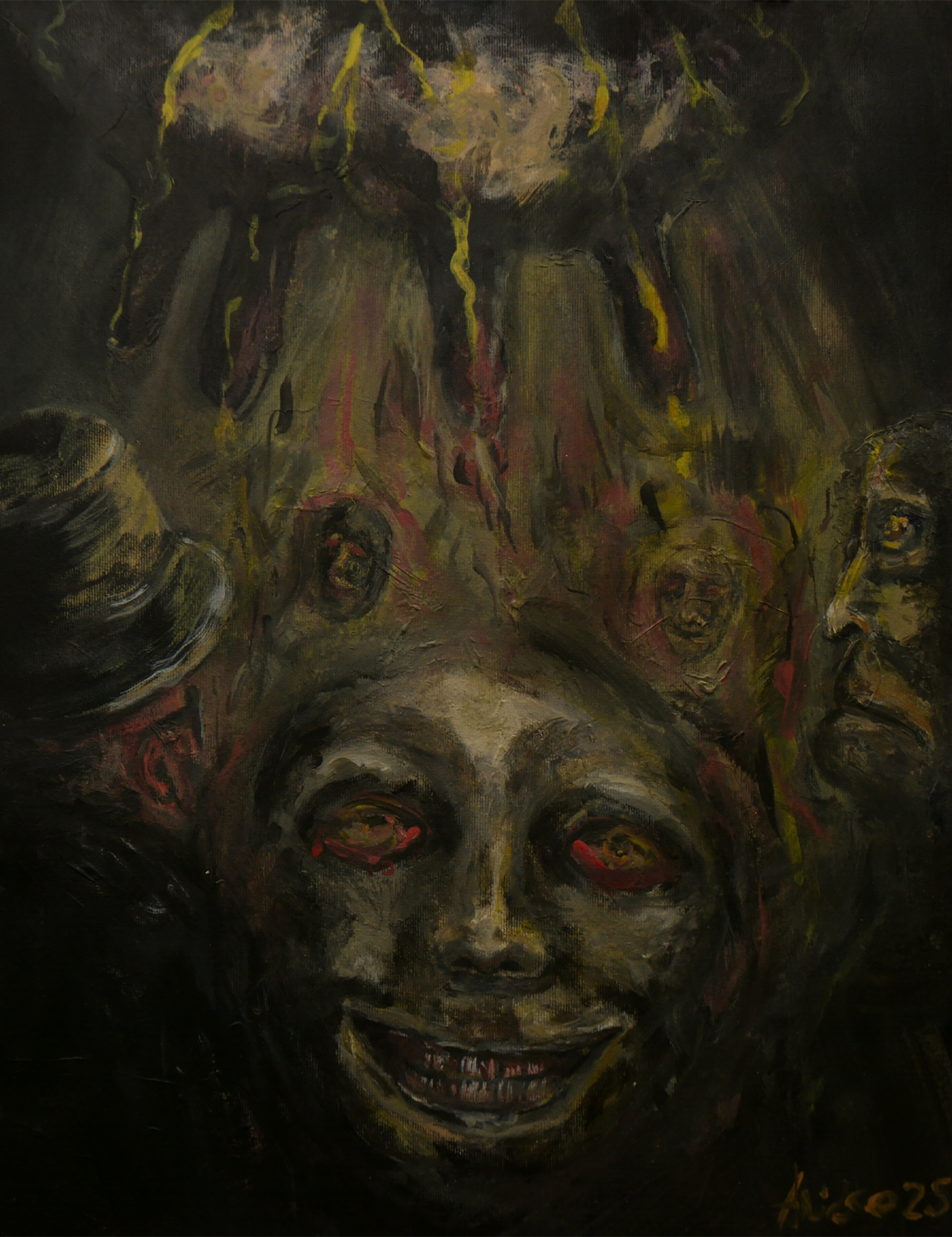
Surface presented as truth. The illusion cracks, but the performance continues.

Not a confession. More like a recognition of contamination from inside the same system.

A procession of faces and signals carrying emptiness like an official emblem.

A false measurement of age, value and belonging, framed as if objectivity were innocent.

A closing mark. Not optimistic. Simply unwilling to kneel in clean language.
A second structure expanding the same pressure from another angle. Here, the body, the image and social obedience collide harder. The language becomes less polite and more exposed.

A rupture between visual seduction and internal collapse.

The crowd becomes texture. The individual becomes residue.
A controlled mess where symbols outlive meaning.
A portrait of obedience disguised as aspiration.
Noise, irony and a smile that should not be trusted.
A body under pressure until posture becomes ideology.
The line ends where tension stops pretending to be elegant.
A shorter sequence, more concentrated and less narrative. Four works operating almost like impact fragments. They do not explain. They insist.
A compressed attack on visual comfort.
Gesture, stain and confrontation reduced to essentials.
A figure trying to remain visible while collapsing into the background.
The section closes with the image almost burnt away by its own insistence.
A two-part structure. Not a reduction, but a tightening. The diptych operates as split pressure: one image leaning into the other, each one incomplete without the wound of the pair.
The first panel opens the fracture but refuses to resolve it.
The second panel does not finish the sentence. It deepens it.
ARISCO is a visual and conceptual space where painting is not treated as décor, product or polite cultural evidence. The work does not try to soothe. It does not try to decorate emptiness with language that sounds acceptable.
The project moves through social distortion, obedience, spectacle, artificial desire and the slow corrosion of independent thought. What appears here is not presented as a catalogue of finished answers. It is presented as pressure, residue and confrontation.
Nothing here was built to behave like a commercial gallery site. The structure remains direct on purpose. Fewer gestures. More weight. Less explanation. More authorship.

For direct contact or acquisition enquiries:
ARISCO does not arrive to behave.
It does not exist to flatter the room, decorate silence, or imitate the cultural manners expected from art once it becomes harmless enough to circulate.
This work is not interested in clean consensus. It is interested in what remains after spectacle, after vanity, after obedience has been repeated so many times it begins to look normal.
The image here is not neutral. The gesture is not innocent. The surface is not calm.
This is not a gallery. It is an aftermath.
ARISCO stands where image, instinct and refusal still have enough force to resist being turned into content.